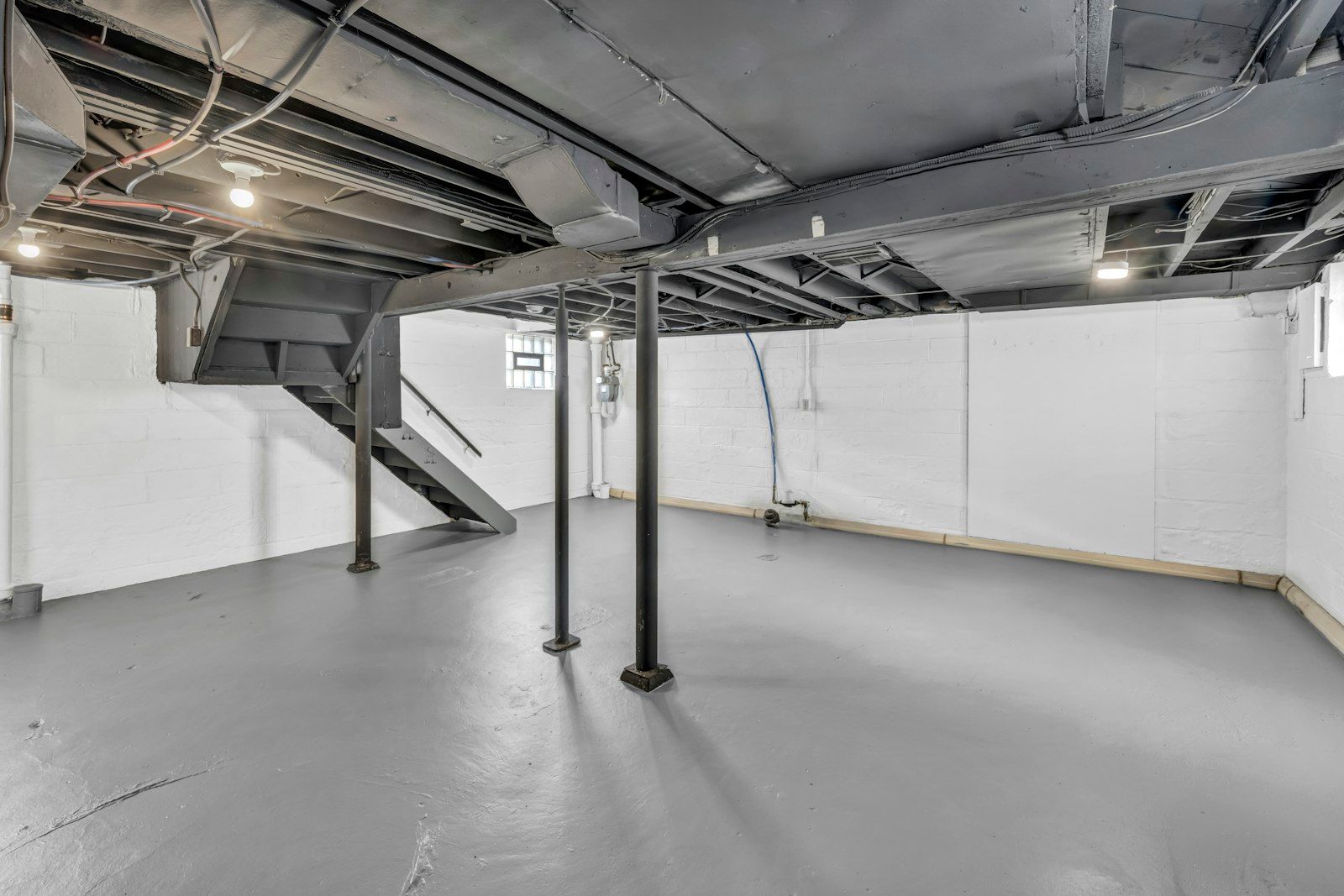
How basement cleanup usually goes
Basements are where most Lee's Summit water damage ends up, because every leak runs downhill. Cleanup tends to follow this pattern:
- Find the entry point. A dead sump pump, a crack in the foundation, a window well full of water, a floor drain pushing back, or a leak upstairs that came through the ceiling.
- Pump and extract. Standing water goes first, then carpet and pad get extracted or pulled out.
- Decide what stays. Wet carpet pad almost always goes. Carpet may be saved if the water was clean and the crew got there fast. Drywall gets cut a foot or two above the water line so the wall cavity can dry.
- Dry it out. Basements stay damp longer than upper floors because concrete holds water and cool air dries slowly. Expect dehumidifiers to run for several days.
If the water came up through a floor drain or toilet, treat it as sewage until someone tells you otherwise. That changes what can be saved.
Before help gets there
- Do not walk into a basement with water near outlets, the furnace or the water heater burner.
- If the sump pump stopped, check whether it is unplugged or tripped a GFCI outlet. A reset sometimes gets it running again.
- Move boxes and anything on the floor to a dry level.
- If you have a battery backup pump, check that it is running.
- Take photos of the water line on the walls before it drops.
Why Lee's Summit basements take on water
Lee's Summit sits on rolling ground, and much of it drains toward the Little Blue River and its East Fork, along with creeks feeding Longview Lake, Lake Jacomo and Blue Springs Lake. That terrain is pretty, and it means plenty of houses are built into a slope with walkout basements and a lot of water flowing past the foundation in a hard rain.
Late spring and early summer are the wettest stretch of the year here. When a thunderstorm stalls over the city, storm sewers can fill faster than they empty. In April 2022, a Friday night storm left neighbors near SE Brentwood and Third with standing water in their yards that was still there the next evening, and the city asked residents to report structural flooding and clogged storm drains. Calls like that come in after most big storms.
Sump pumps do a lot of work in this city. Many homes from the 1980s onward have one, and it tends to fail on exactly the night it is needed most: the power goes out, the float sticks, or a ten-year-old motor finally burns out. Finished basements in Winterset, New Longview and Lakewood make that failure expensive fast, because water soaks into carpet pad, drywall and the bottom of built-in cabinets.
Older homes downtown often have block or poured walls without modern drain tile. Those tend to seep along the floor joint in long rains instead of flooding all at once, which still adds up to wet carpet and a musty smell if nobody dries it out.