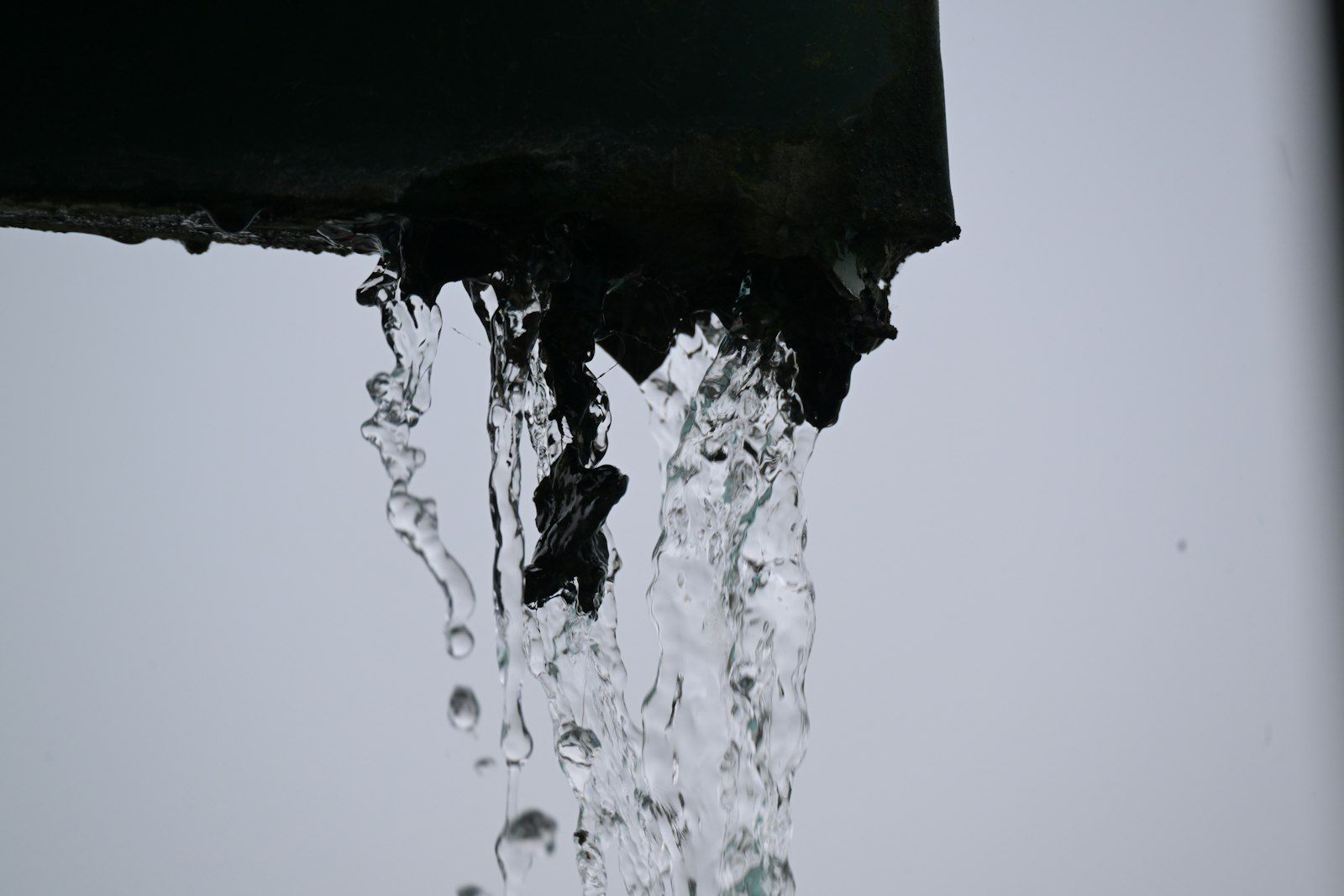
Kinds of storm water damage
Storm damage tends to come in one of a few ways, and each one needs a slightly different fix:
- Roof leaks. Hail and wind tear shingles and flashing, then rain comes through the attic and into ceilings. A roofer tarps the roof. A water damage crew handles the wet insulation, drywall and floors.
- Surface water. Yards that slope toward the house, clogged gutters and full window wells send water against the foundation and through basement windows and walkout doors.
- Flash flooding. When a creek or storm drain overflows, water can rise fast in low streets and come into houses at ground level.
Surface flooding from outside is treated more carefully than a clean pipe leak, since it picks up soil, fertilizer and whatever else was in its path.
After the storm passes
- Stay out of flooded basements until the power to that level is off.
- Stay out of moving water on the street, on foot or in a car. Six inches of fast water can knock a person down.
- Tarp or cover roof holes if you can do it safely from the ground, or wait for a roofer.
- Photograph damage outside and inside before cleanup starts, including hail-dented gutters and torn shingles.
- Call your insurer to open a claim, then call for a cleanup crew.
Storms and flash floods around Lee's Summit
Lee's Summit gets about 38 inches of rain a year, and a big share of it falls in late spring and early summer thunderstorms. Spring is also the season for hail and tornado warnings across Jackson County, and many roof leak calls follow a hailstorm by a week or two, once the next rain finds the damage.
The city sits at the head of several drainages. The Little Blue River forms its northwestern edge, the East Fork Little Blue runs through it, and the creeks around town feed Longview Lake, Lake Jacomo and Blue Springs Lake, all reservoirs built in part to hold back flood water. In 2026 the U.S. Geological Survey and the city published flood maps for a stretch of the East Fork Little Blue River inside Lee's Summit, tied to the rain gauge at Lee's Summit Municipal Airport, to help emergency managers see which streets go under at different rainfall totals.
The calls after a big storm are usually closer to home. A yard that drains toward the house, a downspout that empties next to the foundation, or a window well with no cover can let in a lot of water in an hour. Walkout basements in subdivisions built into slopes, like those around Lakewood and Raintree Lake, see this more than flat lots do.